LEI Number in Australia: Who Needs One and How to Apply
Data checked:
TL;DR
An Australian company does not need an LEI merely because it has an ABN or ACN. The main domestic trigger is ASIC’s OTC derivatives reporting regime, which requires current LEIs for reporting entities and certain transaction participants while allowing narrow temporary alternatives for some counterparties. Buying ordinary ASX-listed shares, making bank payments or registering a company does not create a general Australian LEI requirement.
Does every Australian business need an LEI?
No. Australia has no blanket rule requiring every company, trust, fund or registered business to obtain a Legal Entity Identifier.
An LEI is a unique 20-character alphanumeric code linked to verified public information about a legal entity. It is used across financial reporting systems to identify the entity consistently. It is not a business registration, tax number, licence or approval.
An ABN, ACN, GST registration, company turnover or ordinary commercial activity does not create an LEI requirement. The need normally follows a reportable financial transaction or another regulated identification role.
The broader guide, What Is an LEI Code and Who Needs One?, explains how the global identifier works.
| Entity or activity | Likely position | Reason |
|---|---|---|
| A Pty Ltd company selling ordinary goods or services | No general requirement | Incorporation and commercial activity do not create an Australian LEI mandate |
| A company buying ordinary ASX-listed shares through an Australian broker | No general Australian requirement | The share purchase alone does not trigger ASIC derivatives reporting, although another jurisdiction or reporting chain can affect the answer |
| An Australian ADI, relevant AFS licensee or clearing and settlement facility licensee entering a reportable OTC derivative | LEI required | The reporting entity must be identified with a current LEI |
| A trustee acting as reporting entity for a trust in a reportable OTC derivative | Separate identifiers can be required | ASIC’s reporting structure can identify the trustee as Reporting Entity and the trust as Counterparty 1 |
| An LEI-eligible Counterparty 2 in a reportable OTC derivative | Usually identified by LEI | An existing LEI must be reported; a narrow temporary identifier process applies when no LEI exists |
| A company entering an interest-rate swap, FX forward, CFD or another derivative | Depends | The product, reporting entity, transaction role and available exclusions must be checked |
| A company making a spot-FX supplier payment | Normally no | Spot settlement is distinct from a reportable OTC derivative |
| A private individual investing personally | No | Private natural persons do not obtain LEIs for personal investing |
| A company lodging an ASIC or tax filing | No general requirement | Those filings use Australian registry and tax identifiers |
| A foreign organisation dealing with an Australian or overseas financial institution | Can be required | Australian or foreign reporting rules can require the entity to be identified |
| An SMSF holding ordinary shares, ETFs or term deposits | No general requirement | Those investments do not alone create an LEI mandate |
| A business making an ordinary bank or New Payments Platform payment | No general requirement | Australia has no general LEI requirement for ordinary domestic payments |
If the answer remains unclear, ask the bank, broker or reporting service to identify the transaction and rule behind its request. The scenario guide Does My Company Need an LEI? covers other common cases.
When do ASIC derivatives reporting rules require an LEI?
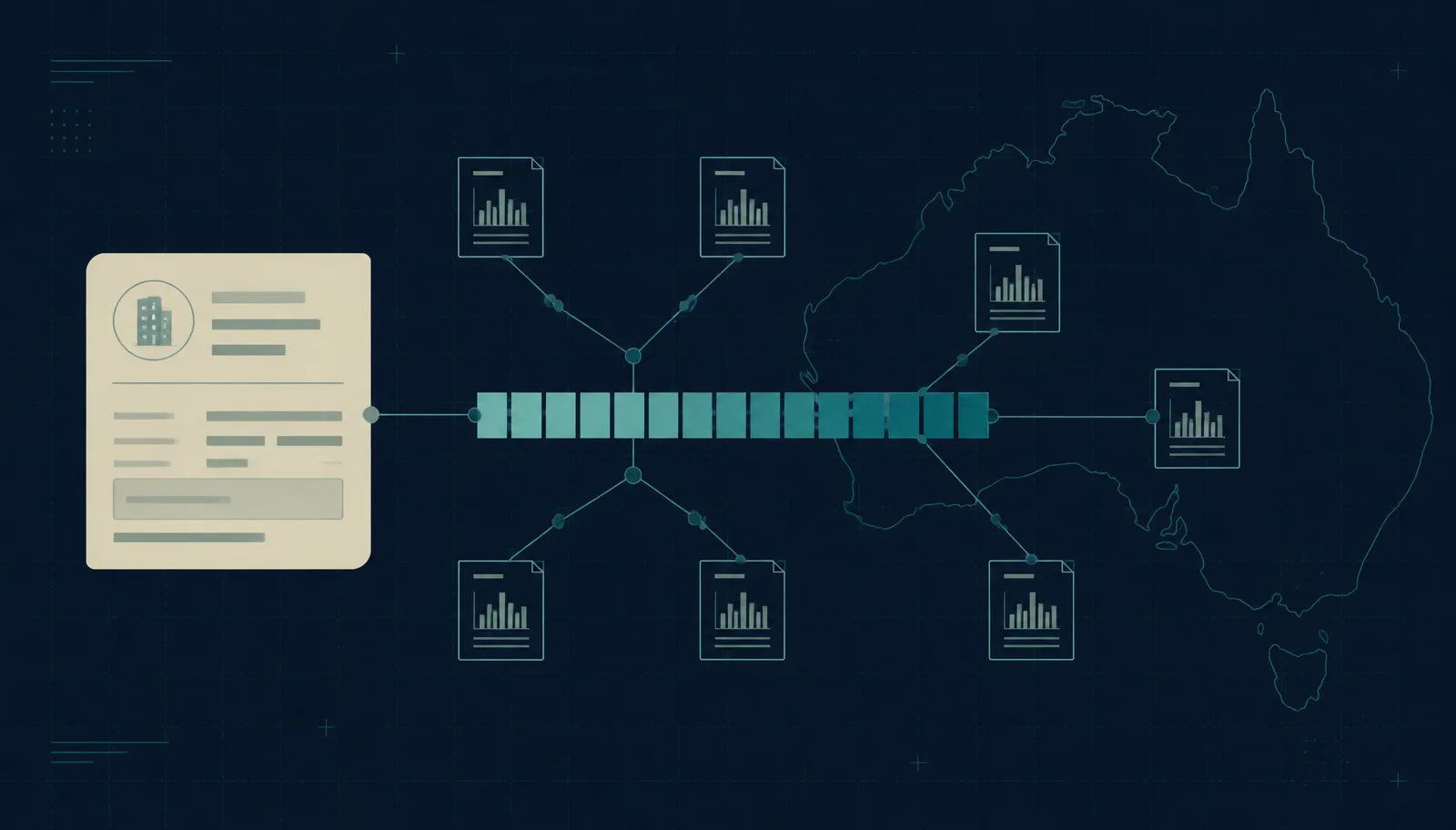
An LEI becomes relevant when an entity must be identified in a report made under ASIC’s OTC derivatives reporting regime.
The ASIC Derivative Transaction Rules (Reporting) 2024 govern reporting for specified transactions and positions in prescribed derivatives. The updated regime began on October 21, 2024. The current compilation includes amendments that took effect on October 20, 2025.
Depending on the structure and transaction, a reporting entity can include:
- An Australian authorised deposit-taking institution
- An Australian financial services licensee authorised for the relevant derivative class
- An Australian clearing and settlement facility licensee
- A responsible entity, trustee or corporate director acting in a specified structure
- A foreign entity within the rules’ Australian reporting scope
An AFS licensee is not brought into every derivative class merely because it holds a licence. Its authorisations and the prescribed class involved must be checked.
The prescribed classes cover:
- Commodity derivatives other than electricity derivatives
- Credit derivatives
- Equity derivatives
- Foreign-exchange derivatives
- Interest-rate derivatives
This list does not make every product reportable. Exchange-traded derivatives, spot-settlement transactions and defined foreign-exchange transactions used to convert funds for securities settlement can be excluded when the relevant conditions are met.
ASIC maintains an overview of the regime on its derivative transaction reporting page.
Who has to submit the derivative report?
The reporting entity remains responsible for compliance even when another organisation submits the report on its behalf.
A bank, trade repository service or reporting vendor can handle the submission. Delegation does not transfer the reporting entity’s responsibility for the report’s completeness, accuracy or timing.
Australian law also separates an end user from the reporting entity. The Corporations Regulations generally prevent derivative transaction rules from imposing the reporting duty directly on an end user. A conditional single-sided reporting exemption can also apply to certain smaller reporting entities when the counterparty reports the transaction and the other conditions are met.
Two monetary thresholds appear in the regime, but they do different jobs.
| Threshold | What it relates to | What it does not mean |
|---|---|---|
| A$5 billion | Conditional single-sided reporting relief for qualifying reporting entities | It is not an LEI eligibility threshold and does not automatically exempt every transaction |
| A$12 billion | The definition of a small-scale buy-side entity for specified reporting treatment | It does not mean organisations below A$12 billion never need an LEI |
ASIC Regulatory Guide 251 explains the reporting-entity tests, end-user treatment, exemptions and reporting responsibility.
Even when an organisation does not submit the report, it can still need to be identified within the report. Filing responsibility and identifier requirements are separate questions.
Which transaction roles need an LEI?
ASIC’s technical guidance requires LEIs for several roles in a reportable derivative transaction.
| Reported role | LEI treatment |
|---|---|
| Reporting Entity | A current LEI is required |
| Counterparty 1 | A current LEI is required |
| Broker | An LEI is reported when the role applies |
| Execution agent of Counterparty 1 | An LEI is reported when the role applies |
| Central counterparty | An LEI is reported when the role applies |
| Clearing member | An LEI is reported when the role applies |
| Report submitting entity | An LEI is reported for the submitting entity |
| Counterparty 2 | Its LEI must be used when it has one; a temporary identifier route can apply when no LEI exists |
| Beneficiary 1 | Its LEI must be used when it has one; a temporary identifier route can apply when no LEI exists |
The detailed fields and validation rules appear in ASIC’s Schedule 1 technical guidance.
If an LEI-eligible Counterparty 2 or Beneficiary 1 does not yet have an LEI, the report can temporarily use an allowed business identifier, such as an ABN, AVID or BIC, or a client code. This route is only available if an LEI application is made within two business days after the reporting requirement arises.
The reporting entity must then use reasonable endeavours to update the report as soon as practical after the LEI becomes available. The temporary identifier is a bridge to the LEI, not a permanent substitute.
ASIC also treats LEI status differently by transaction role. For NEWT, MODI and CORR action types, the Reporting Entity and Counterparty 1 must have a current LEI. ASIC’s guidance accepts ISSUED, PENDING_TRANSFER and PENDING_ARCHIVAL for those roles.
Counterparty 2 is different. For the same action types, ASIC’s guidance can accept ISSUED, LAPSED, PENDING_TRANSFER or PENDING_ARCHIVAL. Exit and reversal actions permit a broader status set.
That distinction does not make a lapsed record safe for every transaction. A different role, financial institution or foreign reporting regime can still require renewal.
A branch must not be treated as a separate legal entity in an ASIC derivative report. The head office is the legal entity, and a branch LEI must not be used in place of the head office’s LEI.
How are trusts, funds and SMSFs treated?
A trust, fund or SMSF can need an LEI when its structure and role in a reportable transaction require separate identification.
Where a trustee is the Reporting Entity and enters a reportable derivative for a trust, ASIC’s reporting structure identifies the trustee as Reporting Entity and the trust as Counterparty 1. Both require their respective current LEIs for the relevant new, modification and correction reports.
A fund manager acting as agent can be reported separately as the execution agent. Paying a manager or reporting service to submit the report does not remove the reporting entity’s responsibility.
A trust or SMSF does not need an LEI merely because it exists or holds investments. Holding ordinary shares, ETFs, managed funds, cash or term deposits does not create a general Australian LEI requirement.
The position can change if the fund or trust enters a reportable derivative, is identified under a foreign reporting regime or is asked for an LEI by a counterparty with its own reporting duty.
Not every trust or SMSF is automatically eligible. The issuer must be able to validate the structure, its legal or financial responsibility and the person authorised to apply. A trust deed, fund document or other governing evidence can be requested when a public register does not provide enough information.
Does an Australian company need an LEI to buy shares?
No general Australian rule requires a company to obtain an LEI merely to buy ordinary ASX-listed shares.
A broker can still request one if the account will trade derivatives, access an overseas market, use a foreign reporting chain or enter another transaction where a legal-entity identifier is required. Ask the broker to name the affected instrument and reporting rule.
A Holder Identification Number is not an LEI. A HIN identifies a CHESS-sponsored holding arrangement and should be treated as sensitive account information. It does not identify a legal entity globally and cannot replace an LEI.
The ASX holder-management guidance explains how HINs and issuer-sponsored holdings work.
Is an LEI the same as an ABN or ACN?
No. An LEI, ABN and ACN serve different systems and cannot be used interchangeably.
| Identifier | Issued or maintained by | Main purpose | Public? | Replaces an LEI? |
|---|---|---|---|---|
| LEI | A GLEIF-accredited LEI issuer | Global legal-entity identification in financial transactions and reporting | Yes | Not applicable |
| ABN | Australian Business Register | Identifying a business or organisation in Australian government and tax dealings | Selected details are public | No |
| ACN | ASIC | Identifying a registered Australian company | Yes | No |
| ARBN | ASIC | Identifying a registered Australian body or foreign company | Yes | No |
| ARSN | ASIC | Identifying a registered managed investment scheme | Yes | No |
| HIN | A CHESS sponsoring participant | Identifying a sponsored securities-holding account | No; treat it as sensitive | No |
An ABN contains 11 digits. An ACN is the nine-digit number ASIC assigns to an Australian company.
The Australian Business Register explains the ABN, while ASIC explains the Australian Company Number and its other company and organisation registers.
An LEI record can include an Australian registry identifier used to validate the entity. That connection does not turn the ABN, ACN, ARBN or ARSN into the LEI.
An LEI issuer can ask for an ABN or ACN to identify the applicant. Neither number is the LEI registration number.
Which Australian organisations can obtain an LEI?
An Australian organisation can obtain an LEI when it is an eligible legal entity or organisational structure that can be validated under the Global LEI System’s rules.
Eligible applicants can include:
- Registered companies
- Eligible partnerships
- Registered charities and nonprofit organisations
- Funds and eligible trusts
- Government and public-sector entities
- Trustees and other legally or financially responsible structures
- Registered sole traders acting in a business capacity when the applicable eligibility conditions are met
A private individual does not obtain an LEI for personal investing. A director also cannot use a personal identifier in place of a company’s LEI when the company itself must be identified.
A business name, trading name, internal department or ordinary domestic branch does not qualify for a separate LEI merely because it has a different name or location. The code belongs to the underlying eligible entity.
A sole trader is not automatically eligible. The person must be acting in a registered business capacity, and the issuer must be able to validate the business structure under the applicable rules.
What information is needed for an Australian LEI application?
An application normally requires the organisation’s official registration and ownership information.
Prepare:
- Exact legal name
- Jurisdiction of formation
- Australian registration authority
- ABN, ACN, ARBN, ARSN or another applicable registry number
- Legal form
- Registered legal address
- Headquarters address, if different
- Entity creation date when requested
- Direct accounting-consolidating parent information
- Ultimate accounting-consolidating parent information
- An accepted reporting exception when parent information cannot be reported
- Applicant name and contact details
- Evidence that the applicant is authorised to act when requested
- Formation, trust, fund or governing documents when public registers do not contain enough information
Parent reporting concerns accounting consolidation. It is not a request to list every shareholder, director or beneficial owner.
LEI reference data becomes part of a public record. Do not enter a personal home address unless it is also the entity’s official legal or headquarters address.
An issuer can validate a registered company from ASIC or ABR data without asking for incorporation documents. Trusts, funds, private structures and applications with inconsistent registry records can require supporting evidence.
How do you apply for an Australian LEI?
- Search for an existing LEI. Search the free GLEIF LEI database using the entity’s complete legal name and Australian registry number. A lapsed LEI should be renewed, not replaced with a second code. The guide How to Verify an LEI explains the fields and statuses.
- Confirm which entity needs the code. A corporate group can contain several legal entities. Apply for the company, trust, fund or trustee identified in the affected transaction rather than a trading name or department.
- Choose an accredited issuer or Registration Agent. Accredited LEI issuers, also called Local Operating Units, issue LEIs. Registration Agents submit applications through an accredited issuer. GLEIF does not issue LEIs directly. Check the GLEIF issuer directory.
- Enter the official registry information. Copy the legal name, address, legal form and registration number from ASIC, ABR or the applicable governing document.
- Report parent relationships. Provide the direct and ultimate accounting-consolidating parent information or the relevant reporting exception.
- Confirm authority to apply. The provider can request evidence that the applicant is a director, trustee, employee, adviser or other authorised representative.
- Submit supporting documents and payment. The required evidence depends on what the issuer can verify from authoritative public sources.
- Check the issued record. Confirm the final record in the Global LEI Index and check that its registration status is
ISSUED. Give the exact code to the institution that requested it. - Record the next renewal date. Report material changes to the issuer and arrange revalidation before the record becomes lapsed.
The complete general process is covered in How to Get an LEI Code: Step-by-Step Guide.
Processing can be quick when the public registry record matches the application. Trusts, funds, authority questions, parent reporting and inconsistent records can take longer. Apply before the transaction or reporting deadline.
How much does an LEI cost in Australia?
There is no official Australian retail price. Accredited issuers and Registration Agents set their own registration and renewal fees.
The following snapshot compares public one-year prices for a single Australian entity. Prices were checked on September 1, 2026.
| Provider | Role | New LEI, one year | Renewal, one year | Published price note |
|---|---|---|---|---|
| LEI Service Australia | Registration Agent for RapidLEI | A$97 | A$97 | GLEIF fee included; the provider states that applicable VAT is excluded, so confirm Australian tax at checkout |
| LEI Register Australia | Registration Agent working through RapidLEI or Nasdaq LEI | A$99 | A$110 | Tax treatment is not stated beside the displayed price; confirm the total at checkout |
| APIR | Registration Agent working with RapidLEI | A$109 | A$109 | AUD price includes GST and the GLEIF surcharge; a credit-card surcharge can apply |
The raw listed new-registration range is A$97 to A$109. The median new-registration price is A$99.
The raw listed renewal range is A$97 to A$110. The median renewal price is A$109.
These figures are list prices, not tax-adjusted totals on a common basis. Promotions, card surcharges, bulk orders, optional services and multi-year plans can change the final amount.
A multi-year headline expressed as a yearly average should not be compared directly with a one-year checkout total. Check the complete amount due, the number of annual revalidations included and the cancellation terms.
Before choosing a provider, confirm:
- Whether it is an accredited issuer or a Registration Agent
- Which accredited issuer will issue or manage the record
- Coverage for Australia and the applicant’s entity type
- Complete first-year price
- Annual renewal price
- GST or other tax treatment
- GLEIF and registry fees
- Automatic-renewal and cancellation terms
- Document requirements
- Trust or fund support
- Published contact information
- Whether the LEI can be transferred later
Changing provider does not change the permanent LEI code. A transfer moves management of the record; renewal revalidates its data. They are separate actions.
The broader comparison is available in How Much Does an LEI Cost? Registration and Renewal Fees.
How long does an Australian LEI application take?
There is no universal issuance time.
A straightforward company application that matches ASIC or ABR records can be processed quickly and may be completed on the same day. A provider still needs to validate the record before issuance.
Trusts, funds, private registries, missing parent information, authority checks and inconsistent names or addresses can extend the process. Do not rely on an advertised five-minute or 24-hour promise when a reporting deadline is approaching.
Does an Australian LEI need to be renewed?
LEI reference data is normally revalidated each year. If renewal is missed, the registration status changes to LAPSED.
The 20-character code does not disappear, expire or move to another organisation. It remains assigned to the same entity, but the public record shows that its data has passed the scheduled revalidation date.
ASIC’s treatment depends on the transaction role. For NEWT, MODI and CORR reports, a Reporting Entity or Counterparty 1 must have a current LEI with an accepted status such as ISSUED, PENDING_TRANSFER or PENDING_ARCHIVAL.
ASIC can accept a LAPSED LEI for Counterparty 2 in those action types. That exception does not apply to every role or every reporting regime. A bank, broker, counterparty or overseas regulator can still require an issued and current record.
Renewing or transferring the record does not create a new LEI. Material changes to the entity’s name, address, legal form, status or accounting-consolidating parents should be reported before the annual renewal date.
See LEI Renewal Explained: How to Renew and Avoid Lapsed Status and GLEIF’s renewal guidance.
Frequently asked questions
Do all Australian companies need an LEI?
No. Australian incorporation, an ABN, an ACN, GST registration or ordinary commercial activity does not create a general LEI requirement. The need usually follows a reportable financial transaction or another identification rule.
Does a Pty Ltd company need an LEI to buy ASX shares?
Not merely to buy ordinary ASX-listed shares through an Australian broker. A broker can still request an LEI for derivatives, overseas-market access or another reportable transaction.
Is an LEI the same as an ABN or ACN?
No. An ABN identifies a business or organisation in Australian government systems, and an ACN identifies an Australian company in ASIC’s register. An LEI identifies an eligible legal entity globally in financial reporting.
When do ASIC derivatives rules require an LEI?
The requirement applies when an entity occupies an LEI field in a reportable OTC derivative transaction. Reporting Entity and Counterparty 1 require current LEIs, while other roles have field-specific rules.
Can an SMSF or trust obtain an LEI?
It can when the structure is eligible and the issuer can validate it. An SMSF or trust does not need an LEI merely because it holds ordinary investments.
Can a sole trader obtain an LEI?
A registered sole trader can qualify when the person acts in a business capacity and the structure meets the Global LEI System’s eligibility and validation rules. A private person investing personally cannot obtain one for that purpose.
How much does an Australian LEI cost?
The one-year public prices checked on September 1, 2026 ranged from A$97 to A$109 for a new LEI and A$97 to A$110 for renewal. Tax treatment, surcharges and included services differ.
Can an Australian entity use an overseas LEI provider?
Yes. The provider does not need to be based in Australia, but the accredited issuer must cover the entity’s jurisdiction and type. Confirm the issuer through GLEIF’s directory.
Does the LEI number expire?
The code remains assigned to the entity. If its reference data is not renewed by the scheduled date, the record normally changes to LAPSED.
Does every Australian bank payment require an LEI?
No. Australia has no general LEI requirement for ordinary bank transfers or New Payments Platform payments. A financial institution can request one for a separate reporting or onboarding reason.
Sources and method
Regulatory pages, technical guidance and provider prices were checked on September 1, 2026.
The regulatory analysis is based on:
- ASIC derivative transaction reporting
- ASIC Derivative Transaction Rules (Reporting) 2024
- ASIC Regulatory Guide 251
- ASIC Schedule 1 technical guidance
- Australian Business Register ABN guidance
- ASIC company and organisation registers
- GLEIF’s introduction to the LEI
The price table compares each provider’s displayed one-year price for one entity. It is a dated market snapshot, not a provider ranking. Promotions, taxes, surcharges and terms can change after publication.
This material is general information, not legal, tax, regulatory or investment advice.
About the author
General information articles from the StandardsDesk editorial team.
Editorial note: StandardsDesk is an independent educational and referral service. It is not an LEI issuing organisation, a Local Operating Unit, a GLEIF Registration Agent, a certification body, or a legal, tax or investment adviser. Services are delivered by independent third-party providers, which may pay StandardsDesk a referral fee. Read the affiliate disclosure.