LEI Renewal Explained: How to Renew and Avoid Lapsed Status
Data checked:
TL;DR
An LEI must be renewed every year. Renewal means revalidating your entity's reference data against the official business registry and paying the annual fee. If you miss the date the record moves to Lapsed status. The LEI still exists, but counterparties may treat it as unreliable.
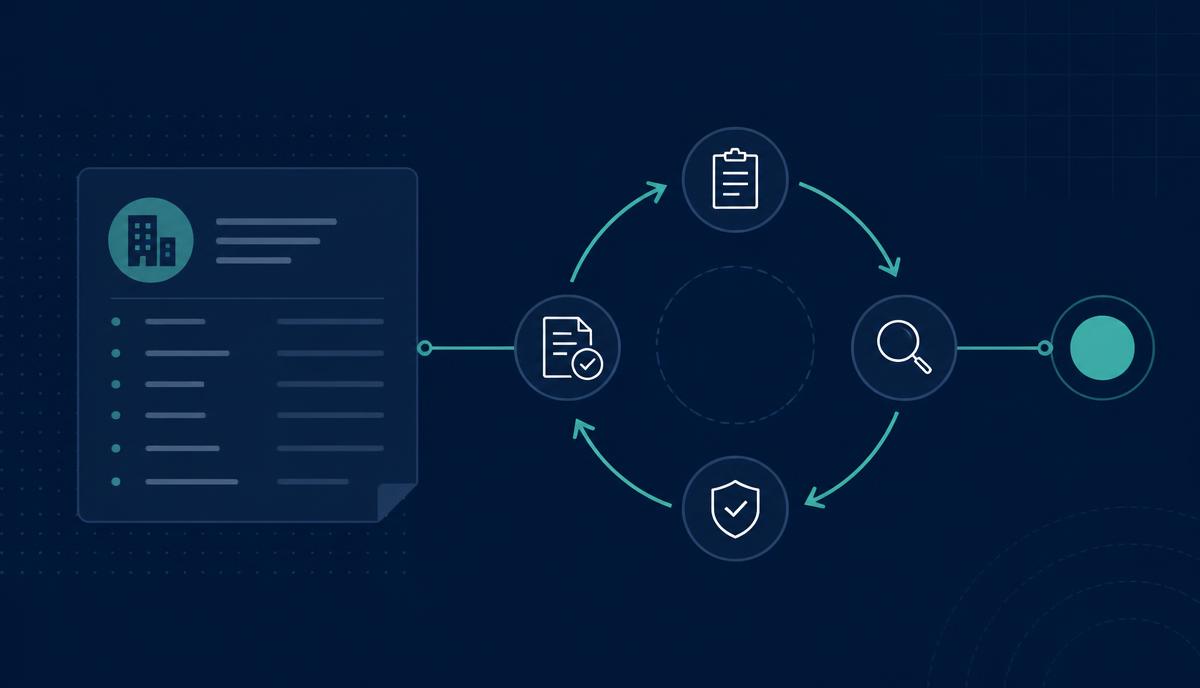
Renewal is handled by the same managing LEI Issuer (Local Operating Unit) that manages the record now, or by another accredited issuer if the entity transfers to one. GLEIF's rules require renewal one year after initial registration and every year after that, and the public record shows a Next Renewal Date marking when the next check is due.
For an introduction to the identifier itself, read What Is an LEI Code and Who Needs One?.
What gets checked during renewal
The issuer validates the entity's information against authoritative sources, chiefly the official business register, and may ask the entity to confirm or update details. Two layers of data matter.
Level 1 - who is who: legal name, previous names, registered address, headquarters address, registration number, registration authority, legal jurisdiction, legal form, entity status (active/inactive) and formation date. These should match the register exactly; differences in spelling, suffixes, addresses or numbers need resolving before renewal completes.
Level 2 - who owns whom: the entity's direct and ultimate accounting-consolidating parent, parent LEIs where available, and any applicable reporting exception. These relationships follow accounting consolidation, not shareholding or beneficial ownership, so they don't simply list every shareholder or group member. If there's no reportable parent, or an accepted exception applies, that reason has to be selected accurately.
The provider may also need to confirm that the person renewing is authorised to act for the entity - a director, authorised employee, legal or accounting representative, corporate-services provider or financial institution acting for a client. If public information doesn't establish this, expect a request for an authorisation document.
When to renew
GLEIF requires the managing issuer to notify the entity at least six weeks before the Next Renewal Date, but don't rely solely on that email: it can go to an employee who has left, get caught by spam filters, reach an outdated address, or come from a provider the entity no longer deals with. Keep the renewal date in the organisation's own compliance calendar instead.
Starting several weeks early leaves time to resolve recent company changes, inaccessible registry information, missing documents, applicant-authority questions, parent-company verification, provider transfers or payment issues. Providers don't all offer the same grace period after the displayed date, so don't assume one.
To check the date yourself, search the free GLEIF LEI Search using the LEI, exact legal name or registration number, open the correct entity's record, and check the registration status, Next Renewal Date, managing issuer and last-update date. Take extra care when several businesses share similar names or belong to the same corporate group. If the date shown by a provider's account or invoice differs from the Global LEI Index, ask the issuer to explain the discrepancy.
How to renew an LEI
- Find the existing LEI. Search the Global LEI Index before paying anything, and confirm the full 20-character code, legal name, registration number, jurisdiction, status and Next Renewal Date. Never submit a new application just because the existing record is lapsed.
- Decide whether to stay with the current issuer or transfer. Staying is usually simpler since the provider already manages the record. A transfer to another accredited issuer may make sense if pricing is more competitive elsewhere, the current provider doesn't support the jurisdiction, support is poor, a corporate group wants to consolidate its LEIs, or the original Registration Agent has stopped operating.
- Review the current public record against the official register: legal name, suffix, registered and headquarters address, registration number, legal form, entity status and parent information. Don't confirm something just because it appeared in last year's record.
- Report any changes - new legal name or address, change of legal form, new register number, new parent relationships, a merger, acquisition, restructuring, liquidation or dissolution, or a correction to inaccurate data. A change doesn't automatically mean a new LEI is needed; the entity is the same unless it has legally ceased to exist.
- Provide supporting documents if requested. These are usually only needed when the register is not publicly accessible, information is incomplete, a change has not appeared publicly yet, authority is unclear, or the entity is a fund, trust or other specialised structure. Possible documents: a register extract, certificate of incorporation, proof of address, filed financial statements, an authorisation letter, or documents supporting parent relationships or a restructuring. Only submit these through a verified provider process.
- Review the renewal terms and pay. Check the price, VAT treatment, registry-document charges, currency-conversion costs, automatic-renewal terms, refund and cancellation rules, and whether a provider transfer or optional extras are involved. For a full cost breakdown, read How Much Does an LEI Cost? Registration and Renewal Fees.
- Respond to validation questions promptly, with documents addressing the specific point raised. Don't submit alternative spellings or substitute a parent's or subsidiary's information for the entity's own.
- Verify the renewed record. Search again and confirm status is ISSUED, the name, addresses, registration and parent information are correct, the last-update date reflects the renewal, and the Next Renewal Date has moved forward. If the record still shows lapsed after the provider says it's done, ask when the update will be published.
What lapsed status means
LAPSED means the record was not renewed by its Next Renewal Date and the entity is not known from public sources to have ceased operating. It does not mean the company has closed, the entity is inactive, the LEI has been deleted, the code belongs to someone else, or a new code is needed - it means the reference data has not been revalidated within the required interval.
GLEIF leaves it to data users to decide whether a lapsed record is good enough for their purpose. In practice, a bank, broker, reporting system or counterparty can and often will reject a lapsed LEI even though the identifier is still validly associated with the entity - so it can cause real problems opening or maintaining a brokerage account, placing trades in regulated instruments, reporting derivatives, other regulatory reporting, or onboarding checks. Don't assume a lapsed LEI will be accepted just because it's still searchable; ask the requesting institution whether it needs ISSUED status, by what date, and whether trading or reporting is restricted meanwhile.
A lapsed LEI can be renewed rather than replaced: find the existing lapsed LEI, choose a provider, confirm and update the entity's information, supply any documents, pay, and check that status has returned to ISSUED. There's normally no reason to apply for a new LEI instead. If the entity has legally ceased to exist, merged, or undergone some other major legal event, the issuer needs to update the record's lifecycle information rather than renew it as an operating entity.
LEI code, status and renewal date are different things
| Concept | Meaning |
|---|---|
| LEI code | Permanent identifier associated with the legal entity |
| Next Renewal Date | Date by which the record should be reviewed and revalidated |
| ISSUED status | The LEI has been validated and remains in good standing |
| LAPSED status | The record was not renewed within the required interval |
| Entity status | Whether the legal entity itself is active or inactive |
A lapsed registration status is not the same as an inactive entity status - they're separate fields, and it's easy to conflate them.
Renewal versus updating, transferring and applying
| Process | Purpose |
|---|---|
| Renewal | Periodically revalidates an existing LEI record |
| Update | Changes incorrect or outdated reference information |
| Transfer | Moves management of the existing LEI to another issuer |
| New application | Obtains an LEI for an eligible entity that doesn't already have one |
| Challenge | Reviews a substantiated concern about published LEI data |
An update can happen during renewal, but significant company changes should be reported when they occur rather than held back for the annual date. A transfer doesn't create a new LEI - the same identifier just moves to a different managing issuer. For the full application process, read How to Get an LEI Code: Step-by-Step Guide.
Transferring provider at renewal is free in itself, though the receiving provider can still charge for the renewal service. Before authorising one, check the receiving issuer's identity, whether the seller is an issuer or a Registration Agent, whether the renewal date will change, and whether the current provider needs to approve the move. The LEI code itself stays the same either way.
A multi-year plan is a payment arrangement, not a way to skip annual checks: the provider still has to complete each year's revalidation, and the entity may still need to confirm details or supply documents when things change. Before buying one, check the effective annual price, how many revalidations are included, whether the provider contacts the entity each year, refund terms if the entity closes or merges, and what happens if the provider stops operating.
Reporting changes, mergers and closures
Don't wait for the annual renewal to tell the managing issuer about a significant change - a new legal name, address, legal form, registration information, entity status or parent relationship. The entity normally keeps the same LEI after an address or name change. A merger, dissolution, conversion or restructuring is more complex: the issuer has to work out whether the original entity continues, has ceased, or has been succeeded by another one, so don't apply for a new LEI without first establishing which entity exists after the event.
An LEI record is not deleted when a company closes - the historical record stays in the Global LEI System, but its lifecycle information should be updated. Contact the managing issuer if the entity enters liquidation, is dissolved, merges into another entity, is acquired in a way that affects its legal existence, or was issued an LEI in error.
Timing, delays and cost
There's no fixed processing time. Renewal tends to be quick when the company is active, registry information is accessible, nothing has changed, parent relationships are clear and payment succeeds. It takes longer when the registry is unavailable, information recently changed, documents are required, authority is unclear, or the entity is a fund, trust or other specialised structure. Start well before the deadline if the LEI is needed for a transaction or regulatory report.
| Cause of delay | Practical response |
|---|---|
| Legal name differs from the register | Use the complete registered name and legal suffix |
| Address recently changed | Provide evidence if the register has not updated |
| Applicant not publicly connected to the entity | Supply an authorisation document |
| Parent relationship can't be verified | Provide accounts or an accurate reporting exception |
| Wrong LEI selected | Confirm the registration number and jurisdiction |
| Entity has merged or restructured | Explain the legal event with supporting documents |
| Registry is inaccessible | Obtain a recent official extract |
| Renewal requires a transfer | Authorise the transfer and allow time to process |
| Renewal started on the due date | Begin several weeks earlier next time |
There's no fixed worldwide renewal price either - it depends on the provider, jurisdiction, entity type, whether it's a one-year or multi-year service, tax, and any extra validation work. A lower registration price doesn't guarantee a lower renewal price, so compare the full cost over the period the entity expects to need an issued LEI. Read How Much Does an LEI Cost? Registration and Renewal Fees for a detailed breakdown.
Check LEI renewal options through StandardsDesk.
Commercial disclosure: LEI registration, renewal and transfer are completed through an independent LEI issuer partner, and StandardsDesk may receive a commission. StandardsDesk is not an LEI Issuer, regulator or government service.
Frequently asked questions
Does the LEI number change when it's renewed?
No. Renewal updates and revalidates the record connected to the existing identifier. The same 20-character LEI stays associated with the legal entity.
Do I need a new LEI if the existing one has lapsed?
No. Renew the existing LEI. An entity shouldn't request another identifier just because its current record is lapsed.
Can I renew before the displayed date?
Yes. Starting early is sensible when uninterrupted issued status matters. Check the provider's terms and allow time for any documents or transfer.
Must the LEI be renewed if nothing about the company has changed?
Yes, if current issued status is required. Renewal confirms the existing information is still accurate - it is not limited to recording changes.
What documents are needed for renewal?
Often none, if the provider can verify everything through an authoritative public register. Otherwise it may ask for a registry extract, authorisation letter, financial statements, or documents supporting a company change or parent relationship.
Is transferring an LEI to a new provider free?
The transfer itself shouldn't carry a fee. The receiving provider can still charge for the renewal or another service.
Can a lapsed LEI still be used for trading?
It depends on the broker, financial institution and applicable rules. Some systems require an issued and duly renewed LEI, so confirm the requirement before placing a transaction.
What happens to an LEI when a company closes?
The public record is retained, but its entity and registration information should be updated to reflect the legal event. Contact the managing issuer rather than abandoning or replacing the LEI.
LEI renewal checklist
- The existing LEI has been found and its status and Next Renewal Date checked
- The managing issuer is identified
- Legal name, addresses and registration information match the official register
- Entity status and parent relationships have been reviewed
- Relevant company changes have been reported
- The applicant's authority is established
- Supporting documents are ready if needed
- Renewal pricing, VAT and any provider transfer are understood
- There's enough time left for validation
- The renewed record has been checked in the Global LEI Index
Official sources
- GLEIF: State Transition and Validation Rules
- GLEIF: LEI-CDF Format and Registration Status Definitions
- GLEIF: How to Use LEI Search
- GLEIF: Importance of Timely LEI Renewal
- GLEIF: Find an LEI Issuer or Registration Agent
- GLEIF: Registration Agents Governance Framework
- GLEIF: LOU Contract Requirements
- FCA: Renewing an LEI Annually
“The Global LEI System empowers everyone, everywhere to answer the questions who is who and who owns whom, with confidence.”
Renew or transfer your LEI
ContinueSources and methodology
Renewal mechanics follow GLEIF published guidance on LEI validity and lapsed status. The 57.1% global renewal rate, and the 61.3% EU and 50.8% non-EU split, are from GLEIF Q2 2026 business reporting, checked on 10 August 2026. Rates are recalculated by GLEIF each quarter.
- GLEIF. About the LEI - checked 10 August 2026
- GLEIF. Global LEI Index - checked 10 August 2026
- GLEIF. Get an LEI: find LEI issuing organizations - checked 10 August 2026
About the author
General information articles from the StandardsDesk editorial team.
Editorial note: StandardsDesk is an independent educational and referral service. It is not an LEI issuing organisation, a Local Operating Unit, a GLEIF Registration Agent, a certification body, or a legal, tax or investment adviser. Services are delivered by independent third-party providers, which may pay StandardsDesk a referral fee. Read the affiliate disclosure.